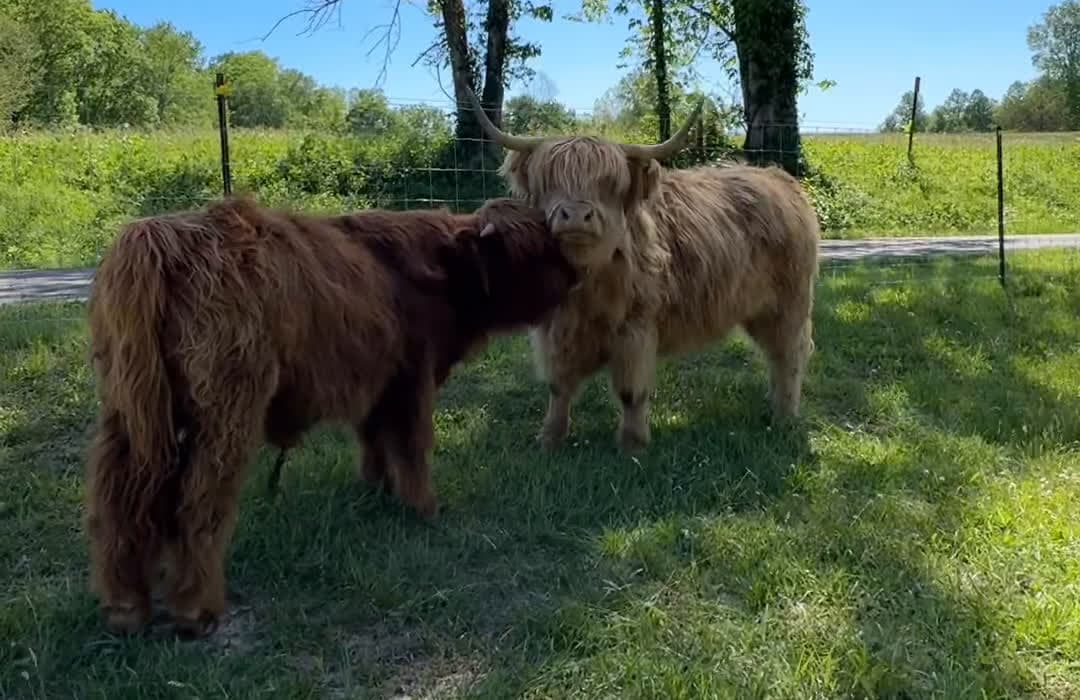
If you only catch the first second, it reads like a postcard. Annye — four years old, yellow brindle coat, opinions about breakfast — walks up behind Rusty, settles that shaggy chin on his back, and rests. Eyes soft. Two Scottish Highlands at the edge of the west pasture, looking like they invented contentment.
We love that part. The social media comments always show it too.
But it isn't random, and it isn't only cute. Scottish Highlands are herd animals, and cattle have their own ways of staying connected. They groom each other, stand close, rest in contact, and seem to know exactly where everyone belongs.
Researchers call some of these friendly interactions affiliative behavior — basically, social bonding. Grooming around the head and neck, standing close, and resting in contact can help maintain bonds within the herd.
Annye's chin-rest fits right into that language.
She's also the older of our two Highlands, and there's a quiet confidence about the way she does it. No pushing. No head-butting. She simply walks over, parks her chin on Rusty, and he stands there like this is exactly how things are supposed to be.
Maybe it's affection. Maybe it's reassurance. Maybe Annye is reminding the youngster that she's still the older one.
Probably a little of all three.
Did you know cattle did this? Out here we do now. We're still learning the dialect one chin-rest at a time.